
Indian benchmark indices Sensex and Nifty experienced a sharp decline in early trading due to escalating tensions in the Middle East, driving crude oil prices higher. Global market bearishness and foreign fund outflows further contributed to investor unease.

India has significantly improved its position as a global foreign direct investment (FDI) destination, climbing two places to 11th in 2025, with inflows surging by nearly 44 per cent to $38.89 billion, according to the United Nations Conference on Trade and Development (Unctad) World Investment Report 2026.

Indian benchmark indices, Sensex and Nifty, closed sharply higher, with the Sensex climbing 1,695.40 points and the Nifty surging nearly 2 per cent, driven by a global market rally and a decline in crude oil prices following US President Donald Trump's declaration that his country has ended the war with Iran.

Indian benchmark indices Sensex and Nifty experienced a significant slump in early trade, driven by a sharp surge in crude oil prices above USD 120 per barrel, weak global market trends, and continued foreign fund outflows.

Indian equities on Dalal Street saw volatility as global market trends and weak rupee impacted investor sentiment. Track Sensex, Nifty50 movement and key market drivers for May 5, 2026.
Indian benchmark indices Sensex and Nifty experienced a significant slump, with the Sensex tumbling 719.08 points, driven by escalating West Asian tensions, a sharp rise in crude oil prices, and a global sell-off in technology stocks.

The Indian rupee depreciated by 34 paise to close at 93.78 against the US dollar, marking its third consecutive session of decline. This fall is attributed to escalating crude oil prices driven by uncertainty surrounding US-Iran peace talks and fresh attacks in the Strait of Hormuz, alongside significant foreign institutional investor outflows from domestic equity markets.
Indian benchmark indices Sensex and Nifty experienced a significant tumble in early trade, driven by surging global oil prices, continuous outflows by Foreign Institutional Investors (FIIs), and persistent geopolitical uncertainties, particularly in West Asia.

Indian equity benchmark indices Sensex and Nifty experienced a significant tumble in early trade, with the Sensex tanking nearly 700 points, driven by uncertainty surrounding US-Iran negotiations, a fresh spike in crude oil prices, and persistent foreign fund outflows.

Investing in gold trumped most other asset classes in terms of compounded annualised returns over the long term, suggests a report by FundsIndia.
Indian benchmark indices Sensex and Nifty experienced a significant slump in early trade, mirroring a sharp decline in global equities and a fresh spike in crude oil prices, exacerbated by simmering tensions in West Asia and a global unwinding of the AI-led rally. Track how sensex, Nifty fared on June 8.

Indian markets on Dalal Street rallied sharply as easing tensions in the US-Iran conflict and stable oil prices boosted sentiment. Track Nifty 50 and BSE Sensex performance and key global triggers.
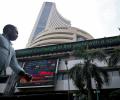
Indian benchmark indices, Sensex and Nifty, saw early gains, primarily driven by IT stocks, amidst expectations of a less aggressive monetary policy from the US Federal Reserve following softer inflation data. Global market trends and upcoming Q1 results are also influencing investor sentiment. Track Sensex, Nifty on july 16.

Indian benchmark indices Sensex and Nifty experienced a significant slump in early trade, mirroring weak global trends, as escalating tensions in West Asia, particularly a drone attack on the UAE's Barakah nuclear facility, pushed crude oil prices higher. Track Sensex, Nifty50 movement and key market drivers for May 18, 2026.

'Buy on dips, buy on dips and sell on rise.'
India's net foreign direct investment (FDI) surged more than fourfold to $6.58 billion in April 2026, driven by a significant increase in equity inflows and reduced repatriation by foreign investors, according to the Reserve Bank of India (RBI).

Global head of equity strategy at Jefferies, Christopher Wood, has cut his exposure to Indian equities by one percentage point in the Asia-Pacific ex-Japan relative-return portfolio, and Australia and Malaysia by half a percentage point each in favour of China, which has seen a hike in exposure by two percentage points. The rally in China has been fast-forwarded by the approach of a seven-day holiday with the CSI 300 Index up 8.5 per cent on Monday, and 25.1 per cent in five trading days, he said.

Stock market benchmark indices Sensex and Nifty ended 2.5 per cent higher on Tuesday after India and the US agreed to a trade deal under which Washington will bring down the reciprocal tariff on Indian goods to 18 per cent.

The Indian rupee saw a significant appreciation against the US dollar following President Trump's suspension of military strikes against Iran and the Reserve Bank of India's decision to maintain its key interest rate. Market sentiment was further buoyed by positive comments from the RBI regarding the health of the banking sector.

Indian benchmark indices Sensex and Nifty surged in early trade, driven by a rally in IT stocks and tempered expectations of US Federal Reserve monetary tightening following softer-than-expected US jobs data. Track Sensex, Nifty on July 3.

The value of the foreign portfolio investors (FPI) holdings in the domestic equities reached $592 billion in three months ended June 2021, a surge of 7 per cent from the preceding quarter, according to a Morningstar report. This was largely on the back of robust net inflows from FPIs, coupled with the strong performance of the Indian equity markets. "As of the quarter ended June 2021, the value of FPI investments in Indian equities stood at $592 billion, which was considerably higher than the $552 billion recorded in the previous quarter, a spike of around 7 per cent," the report noted. As of June 2020, the value of FPI investments in Indian equities had been $344 billion.

Indian benchmark indices, Sensex and Nifty, closed marginally higher after a volatile trading session, driven by value buying in IT and select blue-chip counters, despite global crude price hikes and a weak rupee.

Indian equities on Dalal Street saw volatility as global market trends and oil price hike impacted investor sentiment. Track Sensex, Nifty50 movement and key market drivers for Apr 23, 2026.

Indian benchmark equity indices, Sensex and Nifty, closed lower due to investor caution over rising bond yields, a weaker rupee, and fresh fuel price hikes, which have revived inflation concerns.

Indian benchmark equity indices, Sensex and Nifty, saw gains in early trade, driven by strong performance in banking shares and positive sentiment from Asian markets, alongside optimism surrounding the ongoing US-China Summit.
Indian stock market indices Sensex and Nifty experienced a decline in early trade due to surging crude oil prices and ongoing geopolitical uncertainty in West Asia. Foreign fund outflows further contributed to the negative sentiment.

The Indian rupee crashed to a record closing low against the US dollar due to rising global crude oil prices, a strengthening dollar, and geopolitical tensions in the Middle East.

'The day is not too far when the share of MFs alone will be greater than that of foreign institutional investors.'

Indian benchmark indices Sensex and Nifty experienced a significant decline in early trade, driven by renewed tensions between the US and Iran and a subsequent spike in global crude oil prices, creating uncertainty in the market. Track Sensex, Nifty on July 8.
Indian stock markets concluded Tuesday's trading session lower, reversing intraday gains due to late-session selling in blue-chip stocks like HDFC Bank and Reliance Industries. The decline was primarily driven by the Indian rupee hitting a new record low against the US dollar and elevated global crude oil prices, compounded by geopolitical uncertainties.
Indian benchmark indices Sensex and Nifty closed marginally lower due to profit-taking, following the Reserve Bank of India's decision to keep the repo rate unchanged while lowering its growth expectations for the current fiscal year and forecasting higher inflation.

From the 30-Sensex firms, Tata Steel, Kotak Mahindra Bank, Reliance Industries, Axis Bank, Titan and Trent were among the biggest gainers. However, Tata Consultancy Services, Tech Mahindra, Infosys, Bajaj Finance and Sun Pharma, were the laggards.

Eight of India's top-10 most valued firms saw their combined market valuation increase by Rs 1,87,497.45 crore last week, with Bharti Airtel emerging as the largest gainer, reflecting a positive trend in the equities market.
Indian benchmark stock indices, Sensex and Nifty, closed nearly 1 per cent lower due to surging crude oil prices, weak global market trends, and significant foreign fund outflows, with geopolitical tensions and inflation concerns further dampening investor sentiment.
Indian stock markets experienced a second consecutive day of losses, with the Sensex tumbling 852 points, as crude oil prices surpassed USD 100 per barrel due to stalled US-Iran negotiations and escalating geopolitical tensions in West Asia.

Indian stock market benchmark indices Sensex and Nifty rebounded in early trade, driven by a decline in crude oil prices, supportive global cues, fresh foreign fund inflows, and buying in blue-chips like Reliance Industries and HDFC Bank. Track Sensex, Nifty movement on June 22, 2026.

The continued MF buying has pushed the equity holding of MFs to over Rs 50 trillion for the first time.

Indian markets on Dalal Street rallied sharply as easing tensions in the US-Iran conflict and stable oil prices boosted sentiment. Track Nifty50 and BSE Sensex performance and key global triggers.
Indian stock markets saw a significant rebound, with the Sensex jumping nearly 790 points, primarily fuelled by strong buying interest in telecom, pharma, and private banking shares, despite a volatile trading session and a weakening rupee.
Indian benchmark stock indices, Sensex and Nifty, advanced for the second consecutive day, driven by softening crude oil prices and a positive trend in global markets. Despite some profit-taking in IT and metal shares, auto stocks outperformed, contributing to the overall gains.
